



Current exhibitions


From Forest to Folk Art
Tools in a pre-industrial age
How many tools are needed to build a cabin, a table or a good, comfortable chair?
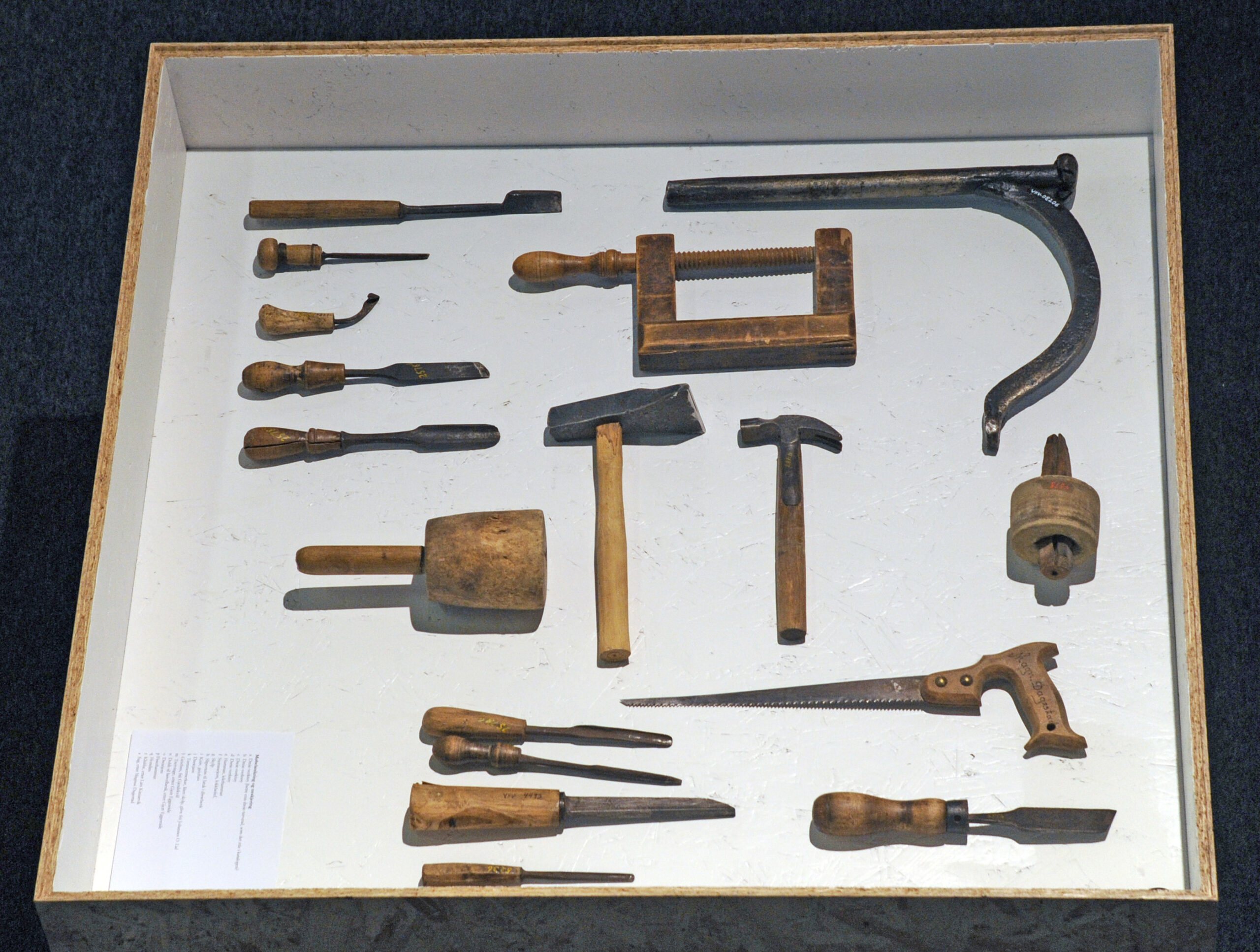
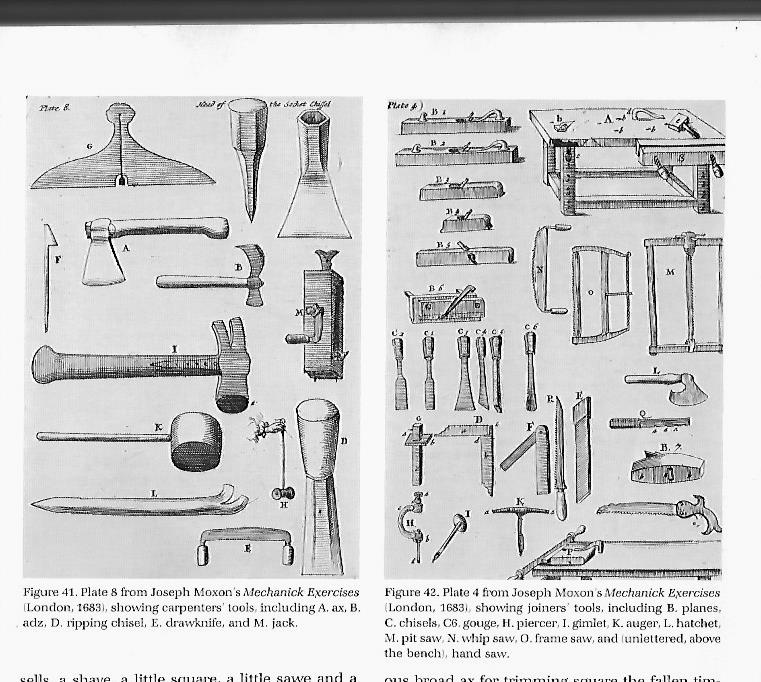
For the first time ever, the large collection of tools at Voss Folk Museum has been given an exhibition all to itself. The scope of the exhibition is restricted to woodworking tools used throughout a period of roughly 800 years. Many of the tools in our collections are from the 18th and 19th centuries, but some are of a type that have been used since the early Middle Ages.
Old farming communities were largely self sufficient and most farms had their own forest and their own smithy. Using simple, self-produced implements, they built cottages, barns, lofts and cabins, as well as everyday and more ornamental items. Without the aid modern machines, living forest was transformed into complete buildings and farmyards.
Our most iconic wooden buildings — stave churches — were also raised using these simple tools. These churches from the Middle Ages are richly decorated with carved dragon heads and winding patterns. Many centuries later, in the 19th century, both woodcarvers and architects found inspiration in these forms. This laid the groundwork for a new national design idiom: drakestil, or dragon style. Among those who adopted the style was Magnus Dagestad, a woodcarver from Voss, who became one of the foremost practitioners of drakestil in Western Norway.
We hope that this exhibition helps you see old wooden buildings and objects, both here at the museum and elsewhere, in a new way. A lot can be achieved by simple means, with the right knowledge about handwork and materials.
- In the farm yard you may see a small exhibition about farm clusters in Voss and life at Mølstertunet at the farm cluster. Artist Adolph Tidemand’s sketches of the dwelling houses at Mølster, in addition to sketches of other farm clusters that once stood in Voss, drawn by the architect Arne Berg.
A model of Mølster, made by the boy scouts in Voss in 1925 is also on display here.
